Andy Williams, Twice Over

- 1975: The Lost Language of the Funks - October 16, 2026
- 1973: Before Terry Funk Was Terry Funk - October 12, 2026
- Violent People Presents: A Funkin’ Fall - October 9, 2026
I’m not sure how I choose who I want to write about when they pass away. I wrote about Black Terry, one of my favorite wrestlers of all time and an important figure in my fandom. I wrote about the death of Sting’s father and the loss of my own mother on this site. On the other hand, I’ve written about Ice Train and Akebono, two wrestlers I’ve enjoyed but never thought of as all-time favorites. I just felt moved to write about them.
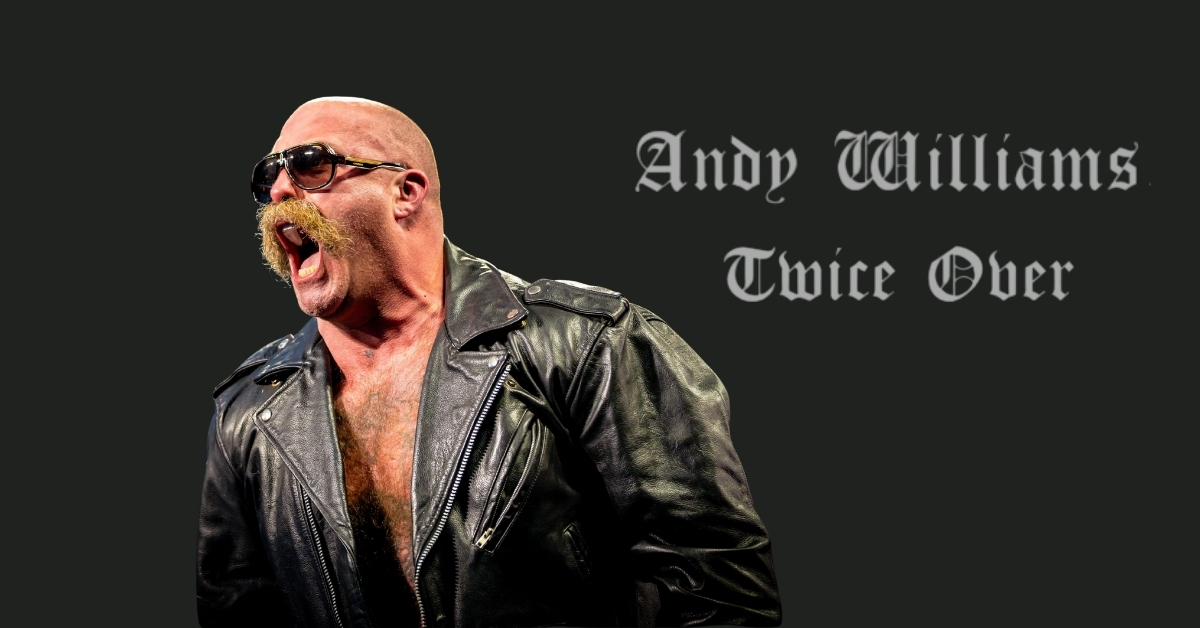
The wrestling world lost both The Butcher, Andy Williams, and Superstar Bill Dundee yesterday. I’ve undoubtedly watched more than twice as many Dundee matches as Butcher matches. I considered Superstar for my GWE list, while Williams never crossed my mind. When I saw the news about Andy, though, I instantly felt the need to, in some way, pay respect to him on Violent People.
Astronaut, firefighter, movie star, or, in my case, center fielder for the Cleveland Indians, a lot of our childhood dreams are out of reach. Maybe our dreams change. Maybe they were never possible. Or maybe a vindictive Little League coach sets us on a path that keeps us out of the majors.
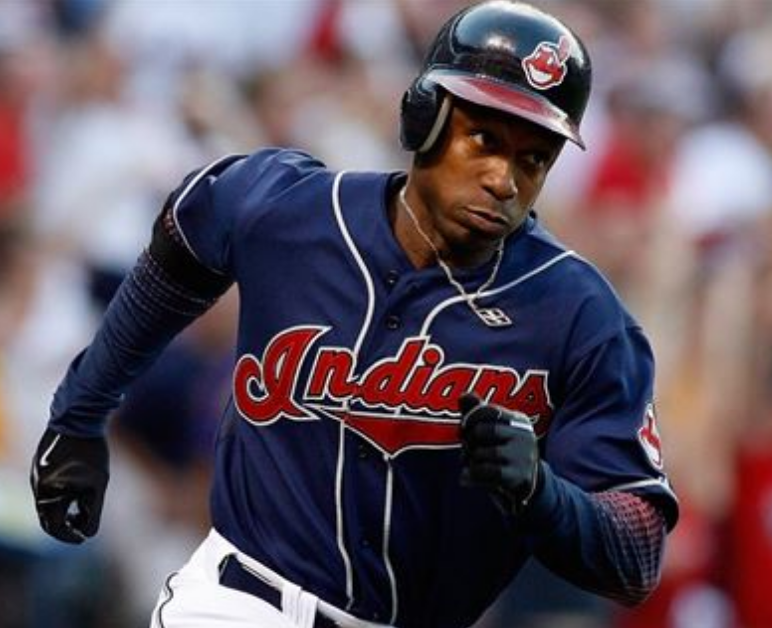
Most of us eventually have to move on and find new dreams, new paths.
Not Andy Williams.
Andy got to live his childhood dreams, twice over.
Williams helped build Every Time I Die into one of the defining hardcore bands of its generation and then, at an age when most touring musicians start making noises when they stand up, reinvented himself as The Butcher and became a legitimate professional wrestler on national television. Put everything he did into one paragraph and his life starts sounding made up.
Andrew Williams died on September 5, 2026, at the age of 48 after collapsing during a tag-team match for Enjoy Wrestling at Mr. Smalls in Millvale, Pennsylvania. Medical personnel immediately came to his aid and he was transported to a hospital, where he was later pronounced dead. At the time of this writing, a cause of death has not been publicly announced.
He leaves behind one of the stranger and more genuinely admirable legacies in hardcore music and professional wrestling. Williams didn’t abandon a childhood dream or even set aside one for another.
Somehow, he got to live both. And he did it on his own schedule.
Andrew Williams was born on December 12, 1977, and grew up in Western New York, around North Tonawanda and Buffalo. Music got to him absurdly early. He remembered his father sneaking him into a John Mayall concert when he was about four years old, an introduction to the blues before most children have developed much of an opinion about music beyond their favorite Disney song. Mine is Go the Distance from Hercules, for the record.
But wrestling was already there too. Like most of us reading this, professional wrestling lodged itself in Williams’ brain when he was a kid and never left. He once remembered a school assignment from when he was around ten years old. The students had to choose a magazine image and paint over it. Other children presumably picked something to do with sports or cars or anything else that wouldn’t concern a guidance counselor.
Years later, when Williams began wrestling professionally, it was easy to frame the whole thing as some wild second act, a metal guitarist deciding to become a pro wrestler. That gets the chronology backward. Wrestling had been there nearly the entire time. “My whole life I’ve been into pro wrestling.”
Spam Beach
To say Andy wasn’t supposed to be both a rock star and a pro wrestler, doesn’t capture the picture enough. He wasn’t even supposed to be a guitarist. Williams played drums in high school. Then came a talent show, a teacher named Mr. Olesky who apparently talked about Spam frequently enough to inspire both affection and a band name, and $450 Williams’ aunt had given him. His father told him to save it for a car.
Andy, though, had an impending talent show and a better idea. Williams took roughly $400 of the money to a music store and bought what he later described as a terrible guitar, amp head and cabinet. There was one significant problem. He did not know how to play guitar. This was apparently not enough of an obstacle to change his plan.
Williams and his friends called the band Spam Beach. He was obsessed with the Melvins and the Jesus Lizard and wanted to make the sort of frightening noises he heard Duane Denison pulling out of a guitar. Andy didn’t. Not yet. But he had found the instrument. The drum kit started collecting dust. He moved into a grind band and played as fast as physically possible. Then he heard Deadguy. Specifically, Deadguy’s Fixation on a Co-Worker and the material surrounding Work Ethic.
Another young Buffalo guitarist named Jordan Buckley was obsessed with the same thing. At a hardcore show in 1997, Williams was wearing a Deadguy shirt. Buckley approached him with an idea: What if they started a band that sounded like Deadguy? Williams was in. Buckley asked whether he had ever played in drop D. “The rest is history,” Williams later said.
Every Time I Die
Every Time I Die formed in Buffalo in 1998 with Williams, Jordan Buckley, Jordan’s brother Keith Buckley on vocals and drummer Michael “Ratboy” Novak. What came next lasted nearly a quarter-century.
The earliest version of Every Time I Die was unmistakably a product of the late-’90s American hardcore scene. Williams never hid the band’s inspiration: Deadguy, Coalesce, Converge, The Dillinger Escape Plan.
Every Time I Die eventually became a sound of their own, not just imitation or admiration. Inside that band, Andy Williams played a very specific role. His riffs often sounded like a train engine being driven through somebody’s living room. Williams’ younger philosophy was simpler: he wanted to make the craziest noises possible.
Every Time I Die turned that into a career. The Burial Plot Bidding War arrived in 2000. Last Night in Town followed in 2001. Then came Hot Damn!, Gutter Phenomenon, The Big Dirty, New Junk Aesthetic, Ex Lives, From Parts Unknown, Low Teens and finally Radical. The records changed. The rhythm section changed. Heavy music changed. Williams stayed.
Touring was the band’s lifestyle, never stopping. Vans, buses, clubs, Warped Tours, festivals, Europe, Australia, back across America, back to Europe, Christmas shows in Buffalo. Another record. Another van. Another floor.
Every Time I Die became one of those bands whose importance couldn’t really be understood by looking at record sales or streaming numbers because a big part of the product was the room. Williams was made for the room. At around 6-foot-3 and somewhere in the neighborhood of 275 pounds at his largest, tattooed and bearded and later wearing the mustache that would become part of his wrestling identity, Andy looked less like a member of the band and more like the bouncer hired to remove the guitar player after he got too drunk and punched somebody.
Underneath the silhouette was still a hardcore kid who never seemed especially interested in rock star mythology. “We’re just dudes that play music,” Williams said. That attitude probably had something to do with Every Time I Die’s impossible durability.
At one point, Williams joked that the Beatles only managed nine years while ETID had already made it sixteen. He compared their longevity not to baseball’s home-run king but to the guy who held the record for getting hit by pitches. Maybe they didn’t hit the most home runs. But Jesus Christ, did they get hit by the ball and stay standing.
Straight Edge
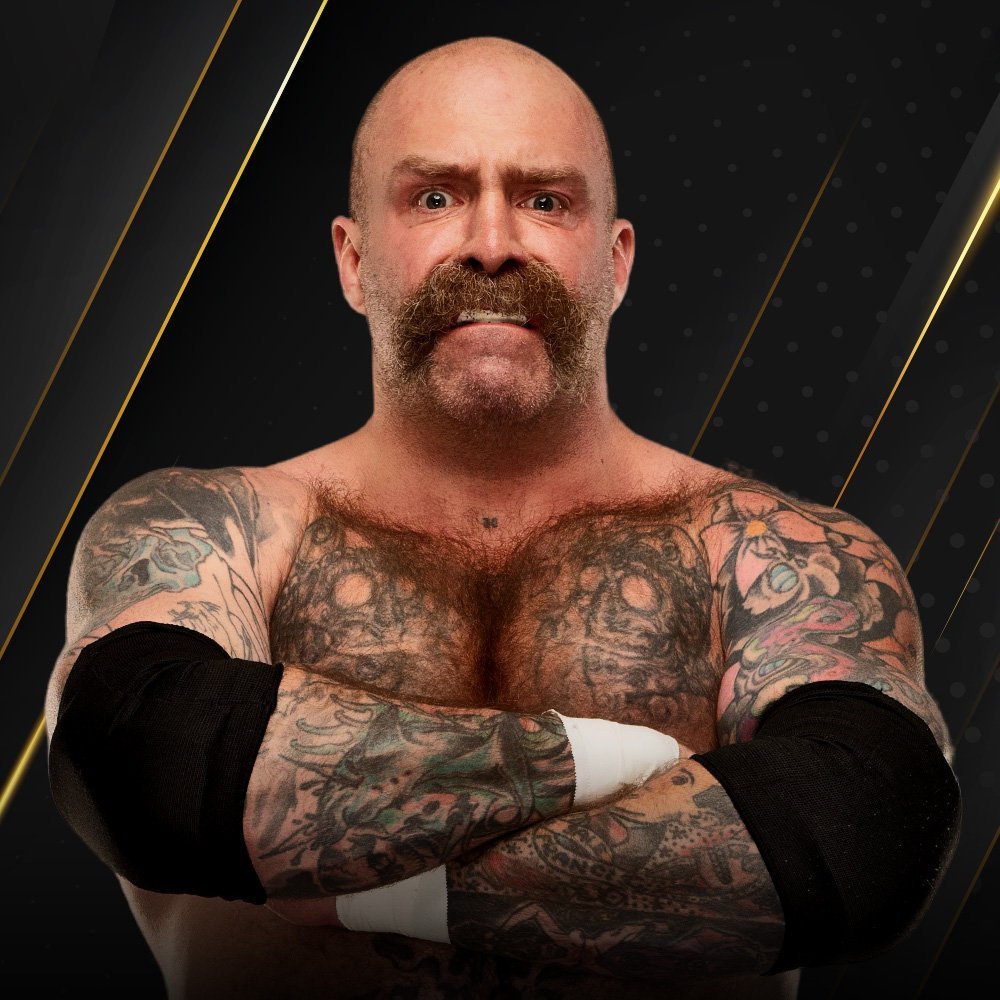
His gnarly appearance could obscure another part of Andy Williams. He was straight edge for most of his life, saying he had avoided alcohol and drugs from around the age of thirteen. Considering the environment he spent the next three decades living in, this qualifies as a massive accomplishment.
Williams did find another substance. Coffee.
Before writing Ex Lives, Williams said he had barely been a coffee drinker. Then he read about Mars Volta guitarist Omar Rodríguez-López creating while using drugs and revisiting the material sober. Andy decided he needed his own chemical writing process. He chose coffee. Not a couple cups of coffee. Pots.
During the Ex Lives period he said he was drinking around three pots a day. Eventually his writing routine became coffee, guitar and a flood of riffs dumped onto Jordan Buckley’s phone. It was an extremely Andy Williams way to develop a substance problem.
Williams was also open about having dyslexia. Dyslexia can often cause the outside world to ignore or overlook someone’s intelligence. He never seemed particularly interested in presenting himself as some grand intellectual while simultaneously revealing deep wells of knowledge about music, film, wrestling history, and guitars.
The people around him tended to describe something else too: generosity. Williams had the dimensions of a terrifying brute and, by seemingly every account, the instinct to give somebody the shirt off his back.
The Other Dream
Calling wrestling Andy Williams’ second career makes it sound too nice and easy. He wanted to wrestle when he was younger. He had trained before injuries and adult life interrupted the plan. Then Every Time I Die became real. Once the band turned into a full-time occupation, seriously pursuing wrestling while touring the world became practically impossible.
The dream did not disappear. It just sat dormant.
By 2015, Williams was publicly talking about training again. He was approaching 40. I’m 38 and recently hurt myself putting on socks. Around this age Andy Williams decided it was time to become a professional wrestler.
He trained seriously and made his in-ring debut in 2016. Independent wrestling became his second touring circuit. Williams wrestled around Buffalo and then farther out, appearing for promotions like Smash Wrestling, C4 and Beyond while still maintaining the schedule of a musician in one of the hardest-touring heavy bands in America.
Eventually he found Jesse Guilmette, known at various points as Pepper Parks and Braxton Sutter. Guilmette became The Blade. Williams became The Butcher.
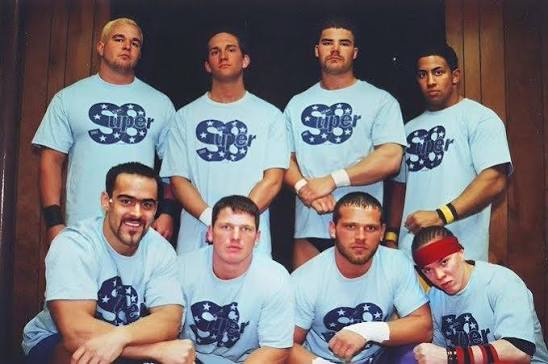
As an aside, as surprising as it was to go from decades as a hardcore band guitarist to wrestling on national television, The Blade’s journey is almost equally ridiculous. As the Talking Tourneys guy, I am legally required to mention that Guilmette appeared as Pepper Parks in the sixth edition of ECWA’s Super 8 in 2002 and was undoubtedly the least likely of the 8 to be picked to be wrestling on national tv in the 2020s. The rest of the lineup consisted of AJ Styles, Amazing Red, Xavier, Jamie Noble, Donovan Morgan, Bobby Roode, and Matt Stryker…ok Stryker was a pretty unlikely candidate to make it to the big leagues too I guess.
Seriously, look at those names and try picking The Blade as the guy who would eventually emerge through the floor of a billionaire’s wrestling company alongside the guitarist from Every Time I Die.
The Butcher
The mustache was already there. Williams had grown tired of strangers touching his beard. He also got heavily into fitness and liked the visual of an old 19th-century strongman. The look also happens to fit professional wrestling like a glove.
The Butcher eventually came out in white, black leather, boots and, most importantly, a monocle. The Blade stood beside him in a mask. The Bunny completed the group.
One of modern wrestling’s worst habits is explaining things that were better before anybody explained them. Williams understood this instinctively.
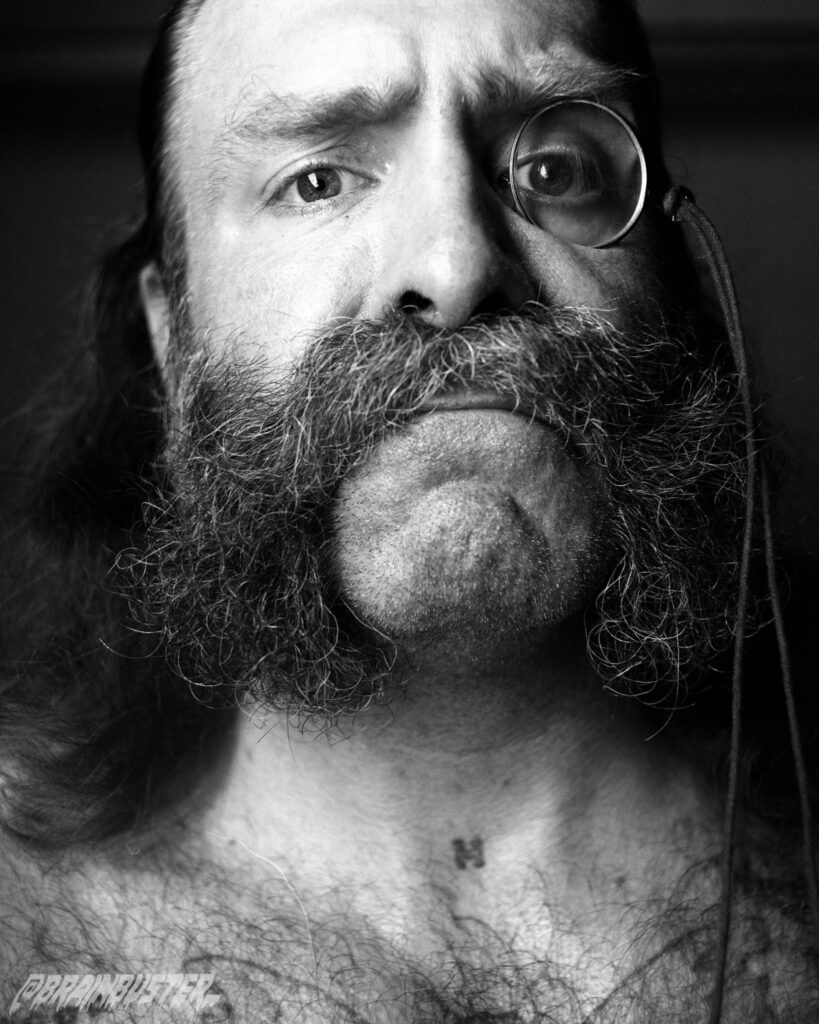
On Talk Is Jericho, he explained The Butcher through the film Road House. The local goons aren’t getting the job done, so the villain eventually brings in some strange dangerous bastard with weird jewelry. The movie doesn’t stop to provide his childhood trauma or a ten-minute explanation of why he’s dressed that way. He’s just the guy you call when ordinary small town violence has failed.
That was The Butcher.
“I don’t want to explain why I have a monocle,” Williams said.
Correct. This is how all things in pro wrestling should be handled.
All Elite
By 2019, Butcher and Blade had begun attracting attention from bigger companies. Ring of Honor nearly got there first. Williams later said ROH wanted the pair involved with Tyler Bateman and had discussed putting the Six-Man Tag Team Championships on them. Dates got changed and plans fell apart. Andy interpreted it as an omen.
Then AEW called.
On November 27, 2019, Cody Rhodes was standing in an AEW ring when the canvas opened. Out came The Butcher. Out came The Blade. The Bunny stood with them. The giant guitar player from Every Time I Die was suddenly beating the hell out of Dusty Rhodes’ son on national television.
That sentence alone would have been a satisfactory ending to Andy’s story. Instead, it was only the beginning.
DDP
Less than two months later, Diamond Dallas Page gave Andy Williams a Diamond Cutter. Consider that sentence. Williams had spent decades as the giant guitar player in a Buffalo hardcore band. Now Diamond Dallas Page, one of the defining stars of the wrestling company Williams watched during the Monday Night Wars and possibly the greatest wrestler ever (according to the Patron Saints of Sick Sons of Bitches,) was hitting him with a self high five.
A week later, at AEW’s Bash at the Beach edition of Dynamite, Williams teamed with MJF and The Blade against Dustin Rhodes, QT Marshall and DDP. It became the final match of DDP’s career and possibly the biggest of The Butcher.
It also ended a streak of Andy’s. For more than two decades, Every Time I Die played shows and Andy Williams showed up. Wrestling DDP became the thing important enough for him to finally miss one. Williams later remembered having only a week and a half between AEW appearances to do a UK tour with ETID, missing a show and flying back for Bash at the Beach.
If you’re going to break a twenty-something-year streak, wrestling Diamond Dallas Page seems like a defensible reason.
Tag Team Glory
The Butcher and The Blade became a seriously underused tag team in AEW. When they were used though, they shined.
Williams once called the Young Bucks the “Michael Jordans of professional wrestling,” marveling at how quickly Matt and Nick Jackson could assemble complicated matches while still listening to everyone else’s ideas.
One of the matches that best showcases this came on the July 22, 2020 episode of Dynamite.
Moxley
AEW eventually gave Williams something even harder for younger Andy to imagine: a world-title match.
In September 2020, The Butcher challenged Jon Moxley for the AEW World Championship. Under any circumstances, wrestling Jon Moxley for the world championship on national television would have been difficult enough for a wrestler in his forties who had only been wrestling professionally for a few years.
For Williams it was even more difficult. Williams had just had COVID. He was medically cleared the day before the match but later admitted his lungs were still badly compromised. He said plainly that he probably shouldn’t have wrestled, but it’s the World Title.
Two Full-Time Jobs
For a while, Williams managed something bordering on impossible. Every Time I Die remained active. AEW remained active. He did both.
He talked openly about the stress of recording a new ETID album while simultaneously needing to leave for wrestling commitments. There wasn’t really a blueprint for what he was doing. Chris Jericho had fronted Fozzy while wrestling. Plenty of wrestlers have bands. But let’s be honest, Fozzy isn’t a serious thing and neither was whatever Jeff Hardy’s band was called or any other wrestlers’ part time band
Every Time I Die wasn’t a side gig or a vanity project. And, Andy’s pro wrestling job wasn’t a celebrity cameo. The man was doing two real jobs.
He trained. He took bumps. Of course, he traveled. He learned how to work. He stood across the ring from people who had spent their entire lives doing this and gradually became credible enough that nobody had to put an asterisk beside his name.
The End of Every Time I Die
Every Time I Die broke apart in January 2022 after a painful and increasingly public collapse involving Keith Buckley and the rest of the band. There is no reason to romanticize it. It was ugly.
He had been in Every Time I Die since the late 1990s. He had spent his twenties there, his thirties, and into his forties. Cities blurred together. Records became tours. Tours became records. Friends became crew members. Bandmates became family in all the good and terrible ways that word implies.
Then suddenly there was no next ETID tour. No next Buffalo Christmas show. No next record.
HardLore interviewed Williams only months after the split. The conversation naturally became a pile of road stories, Buried Alive, ETID, van life, touring disasters, wrestling , because sometimes it’s easier to talk about the life that happened rather than how the thing just ended. Beneath the stories sat a new reality. For the first time since the 1990s, Andy Williams was not the guitarist in an active band called Every Time I Die.
He still had wrestling. The thing that once had to be squeezed between tours was suddenly the thing providing structure while the rest of his identity was being rearranged.
He didn’t immediately try to replace ETID. He could have assembled another band immediately, made a record that sounded familiar, put his name on a poster and tried to pretend continuity was the same thing as healing.
Eventually music came back.
Atomic Rule
The project that emerged became Atomic Rule. That distinction is important. Atomic Rule didn’t need to become ETID 2.0. It gave Williams something more basic: a loud room, a guitar, friends, riffs. The things that existed before Every Time I Die became a career.
By 2026, Williams sounded increasingly reflective about what it means when the thing that defined you disappears and, inconveniently, you continue living. The Todd Christopher Podcast caught him in that space. Christopher had known Williams for more than twenty years, which allowed the conversation to move past normal promotional bullshit.
They talked about aging, friendship, love, legacy, bad decisions, good ones and reinvention.
The episode had the right title: Life. Love. Reinvention.
It’s 100% worth your time.
The Butcher Was Andy Williams
A lot of professional wrestlers today feel like they’re playing professional wrestler. The outfit is right. The poses are right. The sequence is right. Everything has been sanded down until it’s a smooth edge. I feel like I can see the gears turning inside every indie wrestler’s head as they think about what a wrestler should do.
And honestly that’s just the better ones. At least they can keep up the charade, however flimsy.
The Butcher never felt like that.
Because The Butcher wasn’t a gimmick forced onto Andy Williams. The Butcher was Andy Williams and Andy Williams was The Butcher. He was enormous. Self-admittadelyt, was weird. He looked like he had walked out of a photograph taken before labor laws.
Andy loved old wrestling. He loved the physicality and the inherent stupidity of professional wrestling: the fact that a giant man with a curled mustache and monocle can walk into a room and everyone immediately understands why he’s there and what he is going to do. The Butcher did not need lore. He didn’t need a twenty-minute promo explaining his childhood. He just needed to walk through the curtain.
Underneath the character was still the same person who spent his aunt’s money on a guitar he couldn’t tune because a high-school talent show seemed more urgent than owning a car. Williams kept choosing the next thing. The unreasonable next. The thing sensible adults eventually talk themselves out of.
There is a tendency in the rare times when somebody has two careers to treat one as the footnote. Andy Williams makes that impossible.
Calling him only a professional wrestler ignores that his guitar helped define the sound of one of the most important American heavy bands of the last quarter-century. Calling him only the guitarist from Every Time I Die ignores that, in his late thirties and forties, he accomplished the thing millions of lifelong wrestling fans fantasize about while sitting in folding chairs at shows around the world.
He became a real professional wrestler. Not a novelty act. Not a musician doing a guest spot. He became the Butcher.
The Butcher wrestled on national television. He challenged Jon Moxley for a world championship. He was in Diamond Dallas Page’s final match.
Andy did the damn thing.
And he did that after already spending twenty-four years doing the other damn thing.
Neither life diminishes the other.
Andy Williams’ story isn’t about metal or professional wrestling, even though he left fingerprints all over both. It is about refusing the idea that a person only gets one allotted version of himself.
A kid sees Ric Flair stabbing Greg Valentine in a magazine and paints it. A teen spends his car money on a guitar. A kid in a Deadguy shirt agrees to start a band. The band lasted twenty-four years. The guitarist turns thirty-eight and starts taking wrestling bumps. The wrestler ends up on TNT. The hardcore lifer becomes an action figure. The band disappears. The music comes back.
Again and again, Williams reached the point where sensible people say, Well, I guess that’s over.
He kept finding and kicking in another door.
For all the violence attached to both of his professions, breakdowns, stage dives, bumps, chops, bad knees, torn muscles and thousands upon thousands of miles, the words that fit Andy Williams best by the final chapter weren’t violent ones.
Without fail, every one of his peers has described him as a kind, loving, intelligent man. This is not a foregone conclusion when a wrestler passes. There have been lots of let’s say mixed reviews on Bill Dundee since his death.
Andy Williams got to live multiple lives. And, honestly, both were cooler than the one life most people manage to live. And in all those lives he apparently chose to be kind, chose to give.
Maybe that’s the secret to getting to live multiple amazing lives and positively impacting seemingly everyone you meet.
I wouldn’t know. I’m a piece of shit, but I do endeavor to be better every single day. Honestly my knowledge of his wrestling career and his musical career are far surpassed by many others. My words fall short of both capturing his life and acknowledging my sorrow at this loss. Andy wasn’t a religious man, he was seemingly an atheist, though I hate to minimize someone’s beliefs with a one word label, and he probably wouldn’t find comfort in these words, but may his memory be eternal, and may God grant comfort and peace to his family and the many lives he touched.