1981: An Audience of None
Written by Jon Langmead, Author of Ballyhoo!: The Roughhousers, Con Artists, and Wildmen Who Invented Professional Wrestling
Part of Violent People’s FUNKIN’ FALL series: View the full index.
At the start of 1981, the days were already numbered for what we’ve come to call the territory era of professional wrestling. Just a decade earlier the business had been so straight-ahead that a regional promoter could run their area on a piece of paper small enough to fit in their shirt’s breast pocket. By the end of the ’70s, aging one-time kingmakers like St. Louis’s Sam Muchnick and North Carolina’s Jim Crockett Sr. were either dead or ready for retirement with no clear exit strategies to keep their once-thriving businesses intact. Other territories were running on fumes, pushing tired angles and even more tired headliners. Most importantly, mass media was changing, with cable television becoming available in more parts of the country. There were superstations and early experiments with pay-per-view technology, whereas just a few years prior the business had run on nothing more complicated than backroom deals with local television stations and arena managers. And, of course, in New York, Vincent K. McMahon was making nascent plans to ride the coming waves of federal communications deregulation into a garish, maximalist future.
Few understood what was coming, of course, but I like to think that Terry Funk always had a sense of which way the winds were blowing well ahead of everyone else. Funk was, above all things, a survivor. He was born into the business, the rambunctious kid brother to the more respectable Dory Jr. Over time, he developed a style that was wholly his own that he made work all over the globe; a singular mix of violence, humor, and pure athletic ability channeled through a charisma that was matched by few of his contemporaries. Wherever he worked, he got over. And wherever he worked he was always Terry Funk; the one, the only.
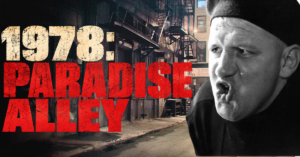
He’d had a run as the NWA champion in the mid-’70s, the highest honor a wrestler could be given at the time. Still, he cut his own reign short when he pieced it together that he could make more money for less work, and preserve his marriage, by focusing more of his time working in Japan. He started taking small roles in big movies and television shows, like Paradise Alley and later, Road House, which was not only a lucrative side hustle but which, unlike pro wrestling, came with health insurance.
Now, why all this matters for Terry Funk in 1981, specifically, is because, while the territories were dying there were still signs of life. And in 1981, Funk partnered with Jerry Jarrett and Jerry Lawler, the only other two remaining wrestling lifers as capable of changing with the times as Funk was, for a match that feels more and more like it was designed with an eye on where the business was headed.
Funk had been working an angle in Memphis that centered on his complaint that a person with a last name that wasn’t Lawler couldn’t get a fair shake in Tennessee, whether that was in a wrestling match or whether it was when trying to book a decent hotel room. It’s a great concept; a prime example of the kind of small-ball grievance that territorial bookers used to be so good at blowing all out of proportion until they became the seed from which blood feuds could flourish.
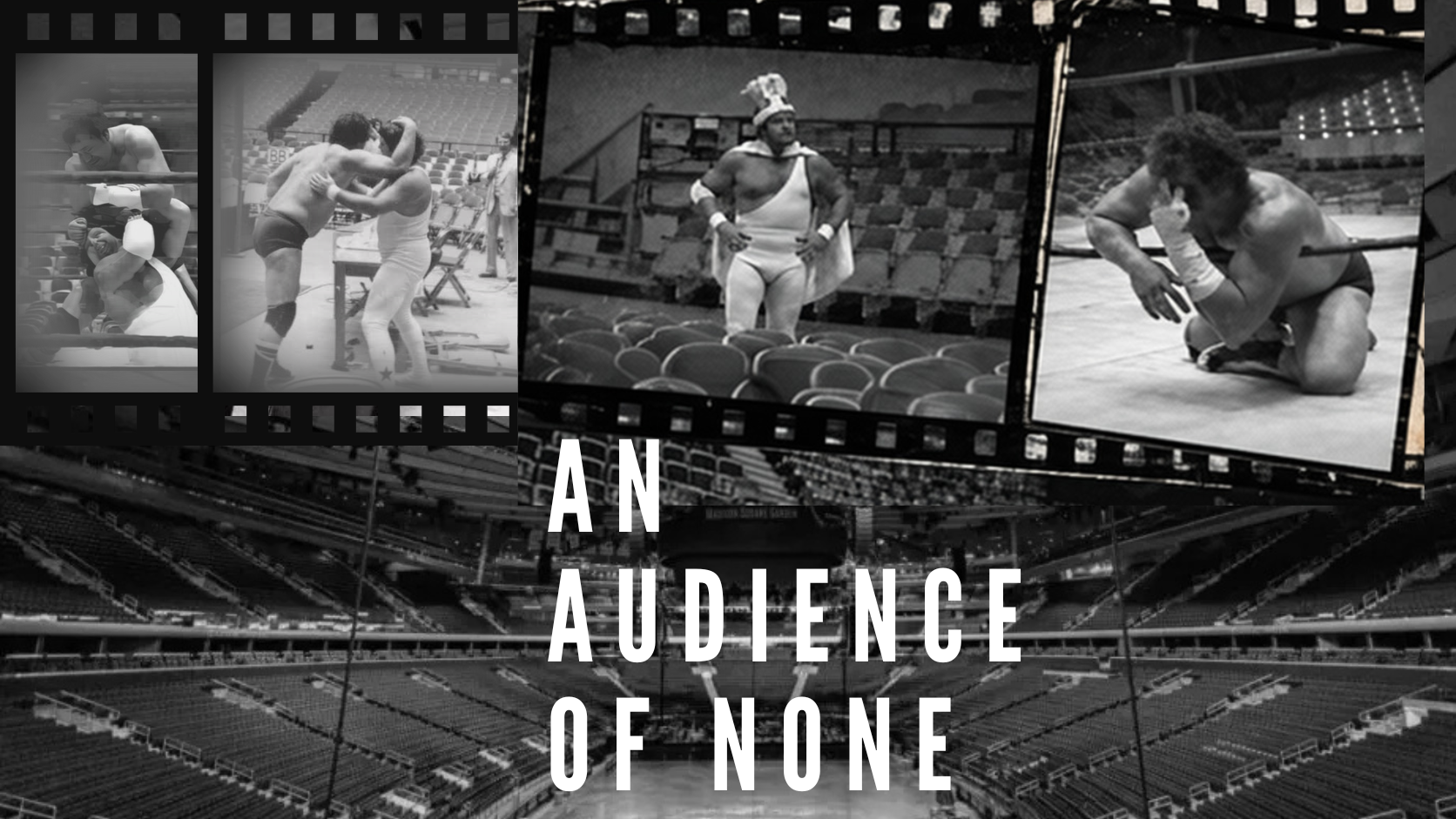
When Funk was needed in Japan for several weeks, Lawler and company struck on the idea of filming an all-out brawl between the two men with the twist that no live audience would be invited to watch it. Lawler saw it as a way to attract attention from the New York-based wrestling magazines that had a tendency to overlook him, but the concept worked on a lot of levels. The idea that Lawler and Funk’s animosity ran so deep, was so intimate, that it necessitated a fight with no rules and no eyes on them, a fight between true mortal enemies, or true brothers, was a stroke of pure booking genius. While having to give away a main event match for free on television was like having to drink hemlock to a promoter, in this case, they concocted a turn that moved the rivalry along and gave Funk the excuse he needed to be out of the picture for weeks on end; the finale would be an injury so horrible that not only would nothing be settled but matters would only be made worse. This was an angle that begged for a master like Funk. In fact, I’ll wager that no one else could have pulled it off and that we certainly wouldn’t be talking about it forty years later if, say, they had booked Austin Idol, in his place. It would have still been good, but it would be nothing like what Funk came up with.
The camerawork was done by Randy West and the encounter was filmed on a Monday afternoon before an evening of matches at the Mid-South Coliseum in April 1981, when the ring and chairs were already in place but before the gates were opened. West shot with a single handheld camera and there are just two edits, a fadeout after Russell’s intro and another at around the fourteen-minute mark, presumably done so he could reload. Taken together, the result is a bravura piece of would-be cinéma vérité.
No one involved has come out and cited a specific inspiration or claimed credit for guiding the overall direction of the segment; for the idea of opening with Lance Russell casually lighting a cigarette and requesting a countdown before West begins filming for real, for Funk coming in hot with a litany of expletives, for Lawler parading to the ring in full regalia only to be derided by Funk for his pomposity. Still, I like to imagine West, or Lawler, or Jarrett walking out of a screening of Albert Brooks’s Real Life or seeing one of his shorts on Saturday Night Live and wondering to themselves if they could pull off something similar.
The match itself is a six-minute brawl preceded by a full eight and a half minutes of setting the scene. Once the action gets going, it doesn’t stop, a true “animal-type of thing” as Russell describes it afterwards. It’s all loony, unhinged hysteria with Funk throwing chairs, screeching in delight when he gets an advantage, and attacking Lawler with whatever he can get his hands on. Lawler is stoic throughout; resigned to the task at hand. He’s like a silent god, unwilling or unable to explain his choices but willing to defend them in mortal combat against members of his dominion who dare to question his authority. He later called it a “really weird feeling wrestling in complete silence, almost embarrassing,” and wrote that he and Funk struggled to know which way to take things without an audience to guide them. This is all very likely, but you wouldn’t know it from the end result. And that it wouldn’t even have occurred to them to plot the match out in advance says all that needs to be said about the ‘let it fly, work it out in the ring’ mentality that defined wrestling’s pre-WWF years.
It ends, of course, with Funk in crisis, his own maniacal plan to blind Lawler having turned horribly wrong, the ultimate victim of his own lunacy. But Funk was bloodied, not bowed. He would still call Lawler a coward and himself the meanest man in wrestling and fans would continue to take him at his word. In a career full of noteworthy matches, this one stands apart. A one-off oddity in its day, today, it’s considered a classic. Like any ensemble piece, it’s made stronger by each of its irreplaceable component parts but all the same, Funk steals the show in a way that makes me think it was built with his unique talents in mind. And like any great performer he took his opportunity and turned it into a piece of shining gold.
More FUNKIN’ FALL: See every year in the series

- 1981: An Audience of None - October 30, 2026
- A Film by Maxx Payne - October 27, 2026
- 1978: Paradise Alley - October 23, 2026