1984: When The Funker Got Funky

- 1984: When The Funker Got Funky - November 6, 2026
- VP100 2025: 10-1 - April 10, 2026
- VP100 2025: 20-11 - April 9, 2026
Part of Violent People’s FUNKIN’ FALL series: View the full index.
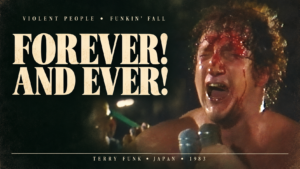
In 1983, Terry Funk retired for the first time. After the Funks’ iconic victory over Stan Hansen and Terry Gordy at Kuramae Kokugikan on August 31, Terry called it quits. You know the promo. Thousands of Japanese fans losing their minds as a bloodied, teary-eyed Funk shouted, “Japan number one! Forever and ever! Forever! Forever! Forever…”
That wasn’t the true end of Terry’s career. The man became legendary for false retirements. He would be back in St. Louis and then All Japan a year later. The Funks would get Dave Meltzer’s fourth-ever five-star rating (back when they meant something, dammit) for their match in the Real World Tag League against Hansen and Bruiser Brody.
Terry had more in him. He had already won countless championships, and he’d go on to win more over the decades. Funk had started his sporadic-yet-memorable film career years prior, and he’d have his most well-known roles in the next few years.
But were there any other worlds Terry Funk could conquer? This series has explored Terry Funk wearing many hats: a wrestler, a man, a folk hero, a legend, an actor, a stunt coordinator. Is there anything this man cannot do? What else is there that he could do?
Well, his name is Funk. He could get funky.
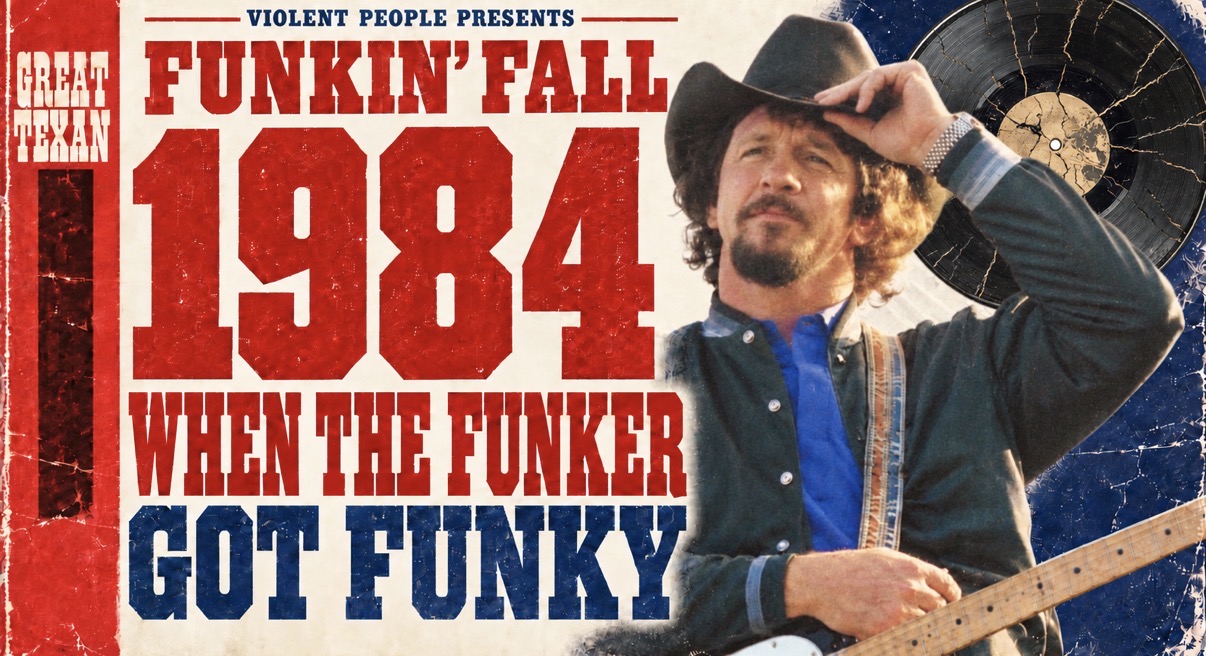
Sometime in 1984, Invitation Records would release Great Texan in Japan. It wasn’t Terry Funk’s first album. That’s Texas Bronco from the year before, but that was mostly instrumentals, interviews, and commentary. Great Texan is the true musical debut of the wrestling icon.
Now close your eyes and imagine what an album called Great Texan by a Texas rancher and professional wrestler would sound like. I imagine it’s bluesy, probably pretty rocking. Lots of twangy guitars. There’d maybe be some horns, something a little jazzy like Creation’s iconic “Spinning Toe Hold” theme song.
This is what we get:
Well, there isn’t much of a Southern twang to that one. Yes, Great Texan is a pop record. It’s got hints of rock ‘n’ roll, but also a lot of disco and city pop. The Living Legend, the Texas Bronco, the Hardcore Icon sings multiple ballads. It is a fascinating relic of the 1980s.
One thing you might notice: for as cheesy as the music is, the musicianship behind it is strong. This Japan-only record where a wrestler talk-sings goofy songs about rockin’ and rollin’ and fightin’ has some serious chops.
Invitation was a label that had access to plenty of great session talent. They released records from acts like fusion legend Masayoshi Takanaka and new wave group Plastics. Prolific jazz musicians like saxophonist Hidefumi Toki and June Yamagishi appear. City pop singer Noriko Miyamoto was a backup vocalist.
Toshio Araki, who plays trumpet on a Casiopea record and the iconic Cowboy Bebop soundtrack, is on this record. Soichi Noriki is on the keys. You may know him if you’ve ever listened to the incredible Super Mario World jazz record.
You might be able to lose yourself in some of those grooves if you aren’t paying attention to Funk’s singing or the lyrics, largely written by the Mouth of the South Jimmy Hart. “They call us juvenile delinquents,” Terry sings. “They say we’re outta control / Juvenile delinquents / ‘Cause we like to rock / And we like to roll.”
The album gets its silliest for “We Hate School,” a song about how Terry Funk hates school. Funk and Hart were 40 years old when this song was written and recorded. Terry was a grown-ass man, a Texas ass-kicker who had been traveling the world for almost 20 years. But two decades isn’t enough to forget the wrongs brought to you by your nagging mother or those stupid teachers. Those stupid grown-ups don’t understand like Terry. As the chorus repeats the words “we hate school,” Terry lets out a defiant yell of “rock and roll” over the background singers.
There’s also the novelty track “Barbra Streisand’s Nose,” where Terry Funk bemoans the pretty gal he brought home that had Brooke Shields’ hair, Dolly Parton’s chest, Mick Jagger’s lips, Herschel Walker’s thighs, but, well, Barbra Streisand’s nose. It is certainly the most “written by Jimmy Hart” track on the album. He’d go on to perform it himself on his Outrageous Conduct album a year later.
Those goofy-ass rock songs stand out, especially because Funk seems to understand how ridiculous this all is in his winking delivery. But it’s the ballads that put this over the top. Consider “Roppongi,” where Funk shows regret for a lost love as he drinks and smokes in the titular city’s clubs. Funk doesn’t have the voice, but there’s an earnestness there that makes it compelling. It feels like when your friend does karaoke and can’t sing but damn, does he show his heart.
Great Texan is not a great record. It’s an attempt to profit off Funk’s stardom in Japan by selling some wrestling fans some novelty songs. It’s maybe a step up from Hulk Hogan and Randy Savage’s work as far as wrestler albums go. Even with some strong jazz and rock talent behind him, he’s not a strong enough performer and the songs are entirely disposable.
The album is a curiosity more than anything. Funk’s forgettable musical debut the same year as his triumphant wrestling return. The one-star record released the same year as his first five-star match. It’s also the kind of curiosity that adds to the legend. Funk’s career isn’t just great matches and title belts and memorable roles in cult movies. It shows his stardom that anyone even had the idea he should release an album. The true legends aren’t just about the iconic moments etched in history. They’re also about the oddities that make you ask, “What the hell was that?”
More FUNKIN’ FALL: See every year in the series